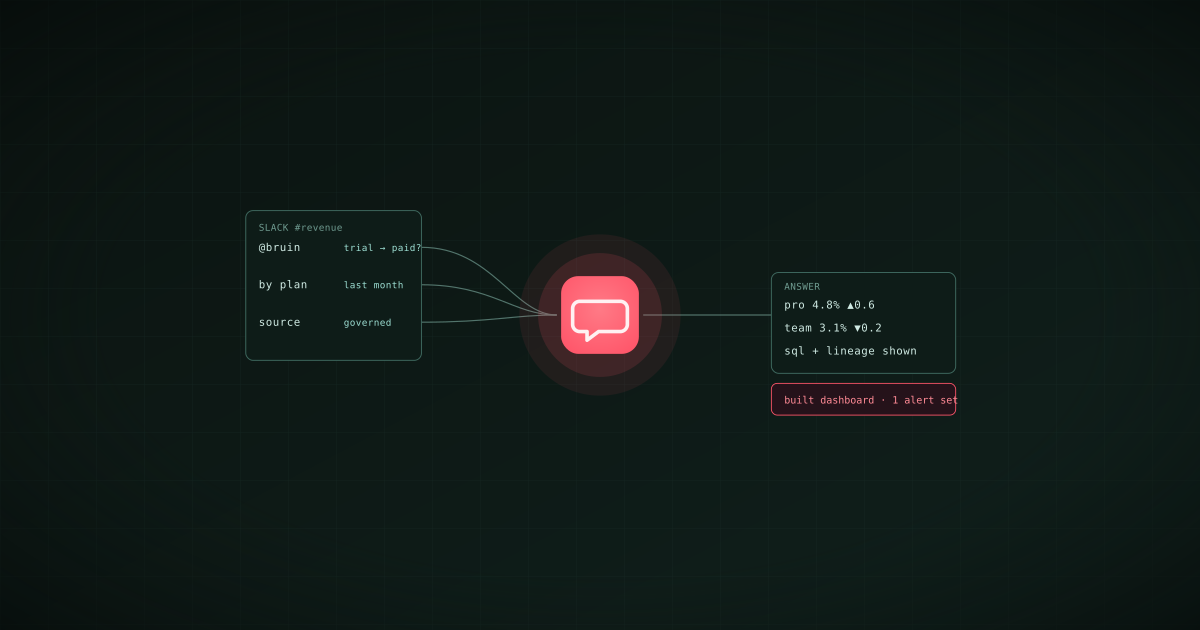
An AI data analyst is a system that answers business questions from live, governed company data in plain English, inside the tools a team already uses, and can go beyond the answer to build a dashboard, send a report, or act on what it found. It is not a chatbot with a CSV attached, and it is not a dashboard tool with a search box. The difference is everything underneath the model: the connection to the warehouse, the definitions of the metrics, the quality checks on the data, and the lineage behind each number. Bruin is an AI data analyst built on its own end-to-end data platform, which is why it is the worked example below; ThoughtSpot, Hex, and Dot are the other tools most teams shortlist.
What it does
Three things, in increasing order of value.
Answer. A product manager types "what was trial-to-paid conversion last month by plan" into Slack and gets the number, the chart, and the SQL that produced it. No ticket, no waiting for an analyst, no export.
Build. "Make me a dashboard for weekly retention by cohort" produces a live dashboard on governed data, not a screenshot. The definitions come from the semantic layer, so the dashboard's revenue is finance's revenue.
Act. "Alert me in this channel if daily signups drop 20% below the trailing average" becomes a scheduled check that posts when it fires. The analyst is not only a query interface; it is present for the team between questions.
How it differs from the two things it gets confused with
| ChatGPT or Claude on a file | A BI tool | An AI data analyst | |
|---|---|---|---|
| Data | A spreadsheet you upload, stale on export | A modelled warehouse, via dashboards someone built | A live connection to the warehouse and SaaS sources |
| Definitions | Whatever the model infers this session | Fixed in the BI model | Fixed in a semantic layer the analyst queries |
| Who asks | The person with the file | Whoever has a seat and a dashboard | Anyone in Slack, Teams, Google Chat, WhatsApp, Discord, Telegram, email, or the browser |
| New question | Re-explain the columns | File a ticket for a new dashboard | Ask it |
| Trust | The model's reasoning about the file | The analyst who built the dashboard | Quality checks, lineage, and the SQL shown with the answer |
| Beyond the answer | Stops | A static dashboard | Builds dashboards, schedules reports, sends alerts |
The general model is excellent at reasoning over what you hand it and useless at knowing what you did not. The BI tool is governed and slow to change. The AI data analyst is the governed layer with the speed of a chat.
What makes the answers accurate
Accuracy is not a property of the model. Frontier models write good SQL. Accuracy comes from four things around the model, and an AI data analyst without them is a chatbot with a database connection.
- A semantic layer. Revenue means one thing, defined once, in code. When the analyst is asked for revenue by country, it compiles the governed definition rather than guessing which of six tables is the right one. In Bruin the definitions live in a
semantic/directory in the pipeline repository, reviewed like code. - Quality checks on the data. If last night's load failed its checks, the analyst should say so rather than report yesterday's numbers as today's. Bruin's checks run inside the pipeline that produces each table, so the analyst knows the state of the data it is about to answer from.
- Lineage. "Where does this number come from" answered with a path from the report to the source table, not a shrug.
- The pipeline itself. The data has to arrive, be modelled, and be current. An analyst that sits on someone else's pipeline inherits that pipeline's gaps. Bruin includes ingestion, SQL and Python transformation, checks, and scheduling in the same project the analyst reads from, which is the reason it can vouch for the numbers.
How to evaluate one
Run the same ten questions your team actually asked last month through each tool and score three things: did it get the number finance would recognise, did it show its work, and did it need anyone to leave the tool they were in. Then ask the harder question, which is what happens when a definition changes. If the answer is "someone updates the model in the BI tool, then the semantic layer, then the docs", the analyst will drift from the business within a quarter. If the answer is one pull request, it will not.
For the tool-by-tool comparison see the best AI data analyst tools in 2026, and for the architecture argument in full, AI data analyst vs AI chatbots.